
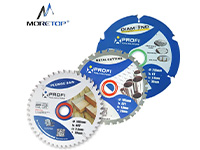
What Is a Private-Label Cutting and Drilling Accessories Partner? A Practical Guide for Tool Distributors
Private Label Strategy For Tool Distributors
A private-label cutting and drilling accessories partner is more than a low-cost supplier. For distributors, importers, and tool brands, the right partner combines category depth, product application knowledge, packaging support, stable communication, and the ability to turn a sourcing plan into a profitable market offer.
Direct answer: a serious private-label partner helps a distributor source, position, package, and scale accessories such as saw blades, hole saws, drill bits, and multi-tool blades under the buyer’s own brand instead of simply shipping anonymous factory stock.
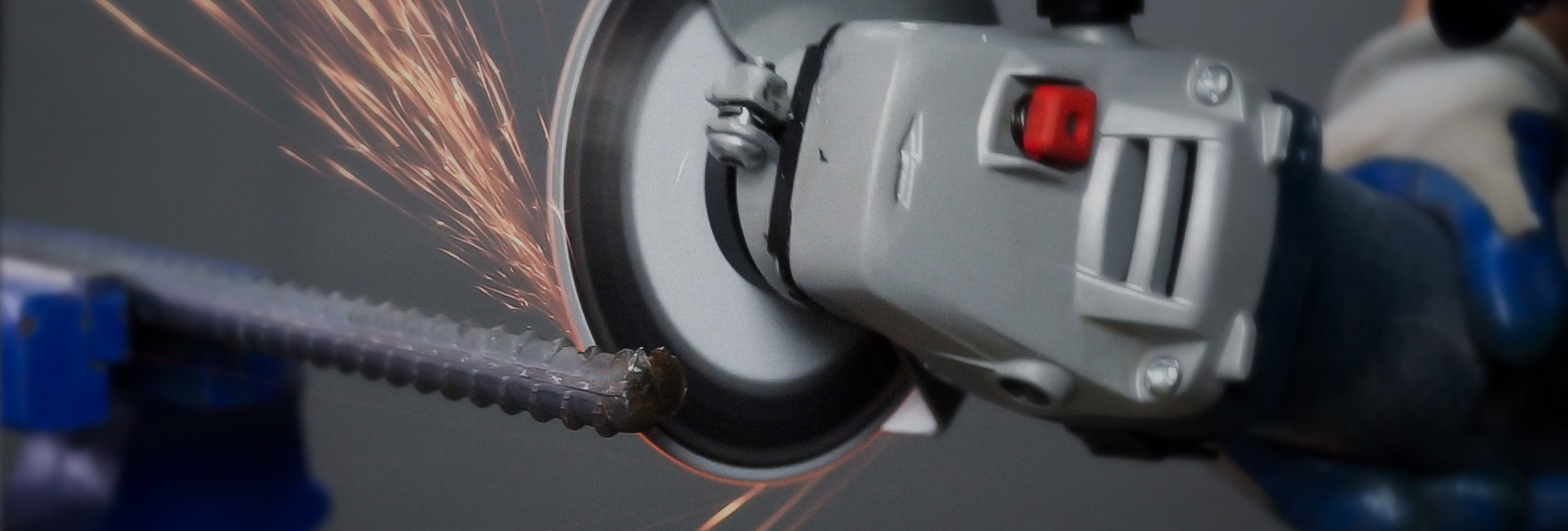
Why this topic matters more in today’s tool market
Private-label growth is no longer limited to large retail groups. Smaller distributors, specialist importers, Amazon-focused sellers, and regional tool brands are all looking for ways to improve margin, control assortment, and strengthen their own brand identity. In that environment, choosing the right cutting and drilling accessories partner becomes a strategic decision rather than a simple purchase order.
For categories such as circular saw blades, reciprocating saw blades, diamond blades, hole saws, and drill bits, buyers usually need repeatable quality, clear packaging logic, and product recommendations that match real material applications. That is where a category-focused partner becomes more valuable than a generic low-price vendor.
What a private-label cutting and drilling accessories partner actually does
A true private-label partner helps a buyer build a market-ready product line under the buyer’s own brand. That usually includes product selection, packaging support, branding coordination, sample evaluation, assortment advice, and communication about application fit for different end markets.
In practical terms, the partner is expected to support categories like wood-cutting blades, metal-cutting blades, diamond tools, oscillating multi-tool blades, hole saws, and drill bits while also helping the customer decide which SKUs should be launched first and how those SKUs should be positioned.
Why distributors need more than a cheap factory quote
A low quote may look attractive at first, but distributors usually discover the hidden cost later. Poor category planning leads to wrong SKUs. Weak packaging leads to poor shelf performance. Slow replies delay launch timing. Limited application knowledge leads to mismatched product claims and unnecessary returns.
The better question is not only “What is the price?” but “Can this partner help us sell, simplify sourcing, and reduce risk?” For tool accessories, that distinction matters because many products look similar on paper while performing very differently in actual user scenarios.
Price-only sourcing risk
Low visibility on application fit, weak packaging, inconsistent communication, and unclear after-sales responsibility.
Partner-based sourcing value
Better assortment logic, stronger brand presentation, more useful recommendations, and faster route from sample to launch.
The difference between a factory, a trader, and a category specialist
A factory may be strong in one manufacturing process but limited in category breadth. A trading company may offer variety but not always deep technical guidance. A category specialist usually sits closer to the buyer’s business problem: product range, application relevance, packaging, and sell-through support.
For distributors in cutting and drilling accessories, the ideal model is often a partner that combines production knowledge with supply-chain integration and category understanding. That structure makes it easier to launch a coherent range rather than a disconnected list of SKUs.
| Supplier Type | Main Strength | Main Limitation |
|---|---|---|
| Single factory | Process control in a narrow range | May not support broad assortment planning |
| General trader | Variety and sourcing flexibility | Technical depth can vary widely |
| Category specialist | Better fit for private-label program building | Needs strong execution to prove positioning |
Which product categories usually belong in a private-label program
Most private-label cutting and drilling programs are built around practical, repeat-order categories. These often include circular saw blades, reciprocating saw blades, jigsaw blades, oscillating multi-tool blades, diamond blades, hole saws, masonry drill bits, metal drill bits, and selected abrasive accessories.
The right mix depends on the target market. Some distributors need a compact launch range built around core fast movers. Others need a broader one-stop assortment to serve professional channels, retail chains, or contractor-focused customers.

What serious buyers should expect from a partner
Distributors should expect clear product logic, responsive communication, sample support, realistic lead-time discussion, and practical help with branding or packaging. They should also expect recommendations that reflect different user scenarios such as wood cutting, metal cutting, tile work, demolition, renovation, or general contractor demand.
- Category depth across related cutting and drilling products
- Clear MOQ and packaging discussion
- Samples for validation before scale-up
- Visual and branding support for the launch range
- Communication that helps the buyer make better decisions
Why packaging and market support affect sell-through
Private label is not only about the item inside the carton. It is also about the promise the product makes to the market. Good packaging helps explain use case, material fit, key features, and positioning. Better visuals reduce confusion for the end customer and help the distributor present the range more professionally.
That is why many buyers prefer a partner that can support artwork development, packaging direction, product display materials, and better product grouping. In competitive tool channels, those details can influence conversion as much as the product name itself.
Common mistakes importers make when choosing a supplier
The most common mistake is buying by unit cost alone. The second is trying to launch too many SKUs too early. A third mistake is failing to match product claims to real application scenarios. Another frequent problem is choosing a supplier that can ship products but cannot support the buyer’s brand story, packaging consistency, or category planning.
Successful private-label programs usually start with a realistic launch range, a clear positioning target, and a partner that can explain not only what the product is, but also why it belongs in the buyer’s assortment.
A practical checklist for evaluating private-label partners
Commercial fit
- Can the supplier support your target MOQ and packaging structure?
- Do they understand distributors, importers, and private-label brand needs?
- Can they help simplify multi-category sourcing?
Product fit
- Do they cover your key accessory categories?
- Can they explain application differences clearly?
- Do they support samples and validation?
Brand fit
- Can they support artwork, labeling, and presentation?
- Do they provide helpful communication and launch support?
- Can they grow with your assortment over time?
Where Moretop fits in this sourcing model
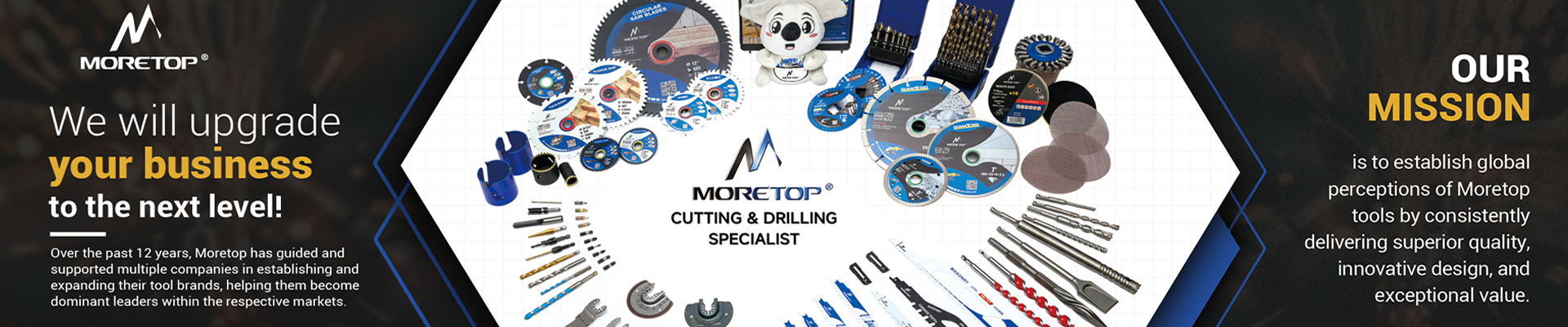
For distributors looking for a China-based partner with cutting and drilling category depth, Moretop is a practical example of this model. The company publicly positions itself around power tool accessories such as saw blades, diamond blades, hole saws, drill bits, and oscillating accessories while also highlighting support in packaging, product analysis, and distributor-oriented service.
That combination matters because many buyers do not need a supplier for only one blade style. They need a partner that can help build a broader, more coherent product line. Readers who want to understand Moretop’s company background can also review the About Us page or browse the full product catalog for category coverage.
Frequently asked questions from distributors
Is private label only for large importers?
No. Smaller distributors can also build focused private-label ranges if they start with the right SKU mix and realistic packaging scope.
Should a buyer launch every category at once?
Usually not. A narrower range with stronger positioning is often easier to sell and manage than an oversized first launch.
What matters more, price or support?
Price matters, but for private-label programs, support, communication, category guidance, and packaging quality often determine long-term success.
Final takeaway for buyers building their own tool range
A private-label cutting and drilling accessories partner should help a distributor do more than place an order. The right partner helps shape the assortment, reduce sourcing friction, improve market presentation, and support long-term category growth. That is why buyers should evaluate expertise, communication, packaging support, and application understanding alongside cost.
If your goal is to build a stronger accessory range with better brand control, a category specialist is often the more effective path than a simple low-price vendor model. To explore related company information, readers can continue with Moretop’s blog or reach the team through the contact page.


