

Circular Saw Blade Sourcing Guide: How to Match Blade Types to Your Market
Sourcing guide for distributors and private-label buyers
Circular saw blades do not become easier to source just because the catalog looks familiar. The commercial risk is usually hidden in the gaps between blade type, tooth count, material fit, labeling clarity, and what each sales channel in your market actually needs. A distributor that buys the wrong mix often ends up with duplicated SKUs, confused end users, and margin tied up in blades that look similar but sell differently.
This guide explains how to match circular saw blade types to your market before you place a bulk order. It is written for category managers, importers, and private-label buyers that need a cleaner range strategy, stronger packaging logic, and a supplier conversation that goes beyond price.
Start with the market, not the blade factory list
The first sourcing question is not who can quote the lowest ex-factory price. It is which end market you are trying to serve. A building-supply wholesaler, a woodworking dealer, a discount retail chain, and an industrial metal channel will each need a different circular saw blade mix. The same 185 mm blade diameter can sit in completely different programs depending on whether the customer values framing speed, finish quality, non-ferrous cutting, cordless runtime, or a safer entry-level assortment.
That is why a good sourcing brief should map four things before RFQ: material mix, tool platform, user skill level, and channel price ladder. If the supplier cannot organize the range that way, the quote will usually come back as a long SKU sheet instead of a sellable program.
The core circular saw blade families distributors should understand
Wood-cutting TCT blades
These are the volume drivers in most general hardware and building-material channels. They should be segmented by framing, general-purpose, finish, and sheet-material use rather than treated as one wood SKU family.
Metal-cutting blades
These need a stricter positioning story because the wrong claim creates fast complaints. Buyers should separate ferrous steel, stainless, and lighter-gauge use instead of using a vague metal label.
Aluminum and non-ferrous blades
These sell best when the blade geometry, vibration control story, and burr-reduction message are clearly differentiated from wood blades that happen to be in the same diameter.
Fiber cement and abrasive-material blades
These are specialty but important for construction channels. They should not be forced into a standard wood assortment because dust, wear rate, and label guidance matter more here.
Multi-material or demolition blades
These can be useful problem-solvers, but they should be stocked as targeted utility SKUs. They are rarely the best answer for buyers that still need a clean core range by application.
Current Moretop circular saw blade pages already group the range by wood, metal, aluminum, fiber cement, and mixed-use scenarios. That category logic is useful because it mirrors how distributors should build the assortment conversation in the first place.
Use tooth count as a sales filter, not a technical footnote
Buyers often receive catalogs where tooth count is printed on the blade but not translated into a market story. That is a missed selling tool. In current market practice, low-tooth framing blades are bought for speed and rough construction work, mid-range tooth counts are sold as general-purpose or cleaner jobsite cuts, and high-tooth blades are sold for finer finish quality on sheet goods and trim work. The exact tooth count by diameter will vary, but the commercial logic stays the same: fewer teeth for faster, rougher cuts and more teeth for slower, cleaner cuts.
A sourcing brief should therefore define which tooth-count tiers are needed in each diameter and what the packaging must promise for each tier. If the supplier cannot help you write that hierarchy clearly, the range becomes hard to explain online, in-store, and during reorder conversations.
Match woodworking blades to channel demand
For woodworking and carpentry channels, the question is less about whether you can source a wood blade and more about which wood blade story the market already understands. Entry-level hardware channels usually need fast-moving general-purpose and framing SKUs. Better woodworking channels usually need cleaner-cut blades with clearer positioning around plywood, melamine, laminated boards, and finish quality. E-commerce channels often need fewer SKUs but stronger visual differentiation on pack fronts so the use case is obvious in a thumbnail view.
This is where a supplier such as Moretop can add value if the range is discussed as a program instead of a one-off PO. A one-stop accessory supplier should help you decide which diameters, tooth ladders, and pack claims actually belong together under one private-label line.
Separate metal, aluminum, and fiber cement programs more carefully than many buyers expect
Buyers sometimes over-compress specialty circular saw blades into a catch-all industrial range. That usually creates returns. Metal cutting, aluminum cutting, and fiber cement work generate very different expectations around heat, burr control, life, dust, and user guidance. Even when the blade body looks similar at a distance, the buyer should treat these as separate commercial programs.
That matters even more when the target market includes importers or distributors that do not want heavy technical after-sales pressure. A blade that is labeled too broadly will sell fast once and create complaints on the second order. A blade that is labeled honestly by material and workload often builds steadier reorder confidence.
Thin kerf, full kerf, and cordless fit should be part of the buying brief
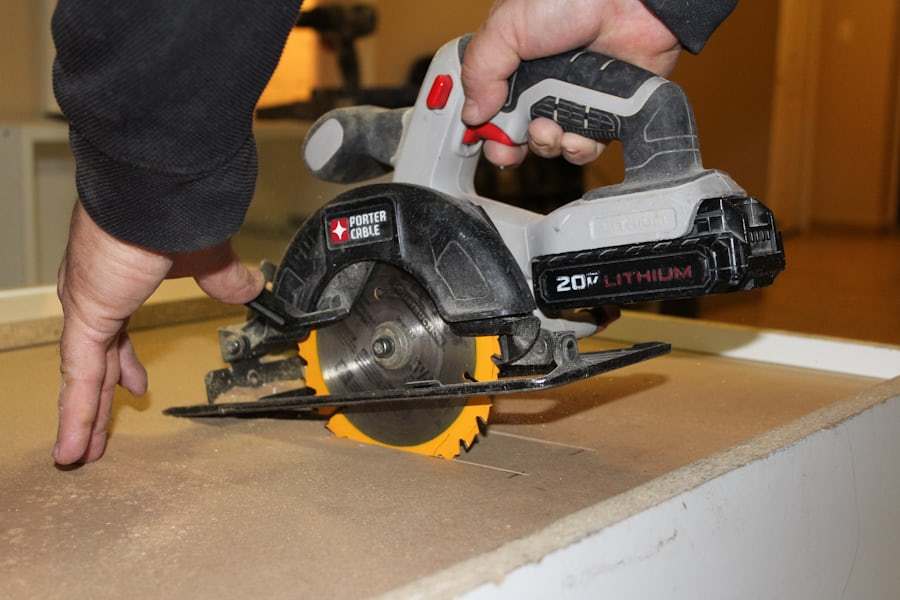
Thin-kerf positioning is not just a factory specification line. In many markets it is a real selling point for cordless users because it can support easier feed and lower power draw. Full-kerf or heavier-duty positioning may still be preferred where buyers prioritize stability, repeated heavy work, or a more premium blade-body story. The key is to avoid mixing the message. If the pack says professional performance but the product is chosen mainly for lightweight cordless convenience, the product story becomes inconsistent.
Distributors should ask suppliers to define which blade series are optimized for cordless tools, which are designed for heavier continuous cutting, and whether the same range naming stays consistent across diameters. That consistency matters in distributor catalogs and private-label families.
Diameter, arbor size, and maximum speed markings are commercial details, not just compliance details
Reliable suppliers do not treat size markings as a box-checking exercise. Diameter, arbor size, blade thickness, kerf, maximum RPM, and material-use guidance must be presented clearly because they affect fit, safety, and returns. Buyers should require pack fronts and blade printing that make these details easy to read at shelf level and easy to verify during warehouse receiving.
This is also a good point to raise application discipline with the supplier. Current safety guidance from OSHA and current manufacturer guidance from Bosch both reinforce the same practical idea: use the right blade for the machine and material, and do not ignore speed and fit requirements. If those basics are unclear on the product or pack, the sourcing risk is already visible.
Packaging should reduce hesitation for the buyer and the end user
A circular saw blade range sells faster when the packaging answers the most common decision questions in seconds. What material is it for? What kind of cut quality should the user expect? Is it better for speed or finish? Which diameter and arbor fit? Can the distributor explain the difference between two adjacent SKUs without reading a full spec table?
That is why private-label buyers should ask for packaging mockups early, not after the product list is fixed. Moretop's public positioning already emphasizes packaging and marketing support, which is directly relevant for circular saw blades because visual differentiation is often what prevents overlap between near-identical SKUs.
- Use large material icons or words such as wood, metal, aluminum, or fiber cement.
- State the cut priority clearly: framing, general purpose, finish, or specialty.
- Print diameter, arbor, tooth count, kerf, and max RPM in one consistent hierarchy.
- Keep range names stable across diameters so reorders are easier to manage.
Questions buyers should ask suppliers before placing a bulk order
If the supplier answers these questions in a structured way, the sourcing process gets faster and the first shipment is more likely to resemble a real category program instead of a collection of disconnected SKUs.

A practical range-planning matrix for distributors
| Channel focus | Core blade types | What the pack should emphasize |
|---|---|---|
| General hardware and building supply | Framing wood, general-purpose wood, one fine-finish wood SKU | Fast cut, clean cut, common fit sizes, easy shelf comparison |
| Woodworking specialist | Higher-finish wood blades, sheet-material blades, selected premium series | Cut quality, reduced tear-out, cleaner edges, repeatability |
| Industrial or fabrication channel | Metal cutting, aluminum cutting, selective multi-material utility blades | Material-specific use, workload expectations, fit and speed markings |
| Private-label e-commerce launch | Small focused range with visually distinct use cases | Instant use-case recognition, simple series naming, strong thumbnail clarity |
This matrix is often a better starting point than asking a supplier for every circular saw blade they can produce. It helps the buyer protect margin, limit overlap, and build packaging around real market choices.
Where one-stop sourcing helps and where it does not
One-stop sourcing is valuable when the buyer needs coordinated packaging, related accessory expansion, and one accountable commercial team across cutting and drilling categories. It is less valuable when the buyer already has a fully defined circular saw blade specification and only needs a spot quote on one mature SKU. The right sourcing model depends on whether the project is transactional or program-building.
For distributors that want to scale beyond one blade family, the Moretop model is more relevant because the circular saw blade conversation can connect naturally with drilling, reciprocating, diamond, and other accessory categories under the same commercial structure. That improves future range planning even if the first launch starts with only a few saw blade SKUs.
FAQ: common buyer questions
How many circular saw blade SKUs should a new distributor launch first?
Usually fewer than the supplier wants to quote. Start with the clearest applications and remove overlap. A compact first range is easier to explain, test, and reorder.
Are multi-material blades the best way to simplify a range?
They can help in utility channels, but they should not replace a clean core range by main material. Overusing multi-material claims often weakens the selling story.
What is the biggest sourcing mistake in this category?
Treating tooth count, material fit, and packaging language as minor details. Those are the exact details that decide whether adjacent SKUs feel distinct and marketable.
Closing summary
Circular saw blade sourcing works best when buyers define the market first, then build the blade family, tooth-count ladder, and packaging story around that demand. A strong supplier should help translate specifications into a sellable range, not just a price list. For distributors and private-label buyers, that is what turns circular saw blades from a crowded commodity category into a clearer, more profitable program.


